Month: December 2024
-
Men who have an elaborate philosophical defence of their views sometimes take pleasure in boasting of their almost babyish credulity. Having reached their own goal through labyrinths of logic, they will point the stranger only to the very shortest short cut of authority; merely in order to shock the simpleton with simplicity. Or, as in the present case, they will find a grim amusement in presenting the separate parts of the scheme as if they were really separate; and leave the outsider to make what he can of them.
So when somebody says that a fast is the opposite to a feast, and yet both seem to be sacred to us, some of us will always be moved merely to say, “Yes,” and relapse into an objectionable grin. When the anxious ethical enquirer says, “Christmas is devoted to merry-making, to eating meat and drinking wine, and yet you encourage this pagan and materialistic enjoyment,” you or I will be tempted to say, “Quite right, my boy,” and leave it at that. When he then says, looking even more worried, “Yet you admire men for fasting in caves and deserts and denying themselves ordinary pleasures; you are clearly committed, like the Buddhists, to the opposite or ascetic principle,” we shall be similarly inspired to say, “Quite correct, old bean,” or “Got it first time, old top,” and merely propose an adjournment for convivial refreshment.
G.K. Chesterton, The Feasts and the Ascetic
Nevertheless, it is a temptation to be resisted -
Recapturing the Magic of the Early Blogging Days
Chuck Grimmett’s post on recapturing the magic of the early blogging days describes a lot of my intentions with the latest changes to my website. The one thing I would add from my philosophy is: ‘spend less time building, more…
-
What many of us fail to realize is that the last four hundred years are a highly special period in the history of the world. The pace at which changes during these years have taken place is unexampled in earlier history, as is the very nature of these changes. This is partly the result of increased communication, but also an increased mastery over nature which, on a limited planet like earth, may prove in the long run to be an increased slavery to nature. For the more we get out of the world the less we leave, and in the long run we shall have to pay our debts at a time that may be very inconvenient for our own survival. We are the slaves of our technical improvement and we can no more return a New Hampshire farm to the self-contained state in which it was maintained in 1800 than we can, by taking thought, add a cubit to our stature or, what is more to the point, diminish it. We have modified our environment so radically that we must now modify ourselves in order to exist in this new environment. We can no longer live in the old one. Progress imposes not only new possibilities for the future but new restrictions.
Norbert Wiener, The Human Use of Human Beings: Cybernetics and Society -
December 2024
This website After reading a number of thought provoking articles on sharing work and connecting with people, I’ve decided to become more intentional with this website and share more of what I’m doing, what I’m reading, and what I’m thinking…
-
Fire Insurance Maps of Calgary
Back in the early days of fire insurance, when you wanted to insure a building, the insurance company would send a underwriter to view the building and gain a first hand appreciation of the risk. As cities began to expand…
-
Speaker Grills of the World
Speaker Grills of the World is a single topic website, which is exactly what it sounds like, a collection of different speaker grill designs. A great source for examples and inspiration when designing patterns of holes in things.
-
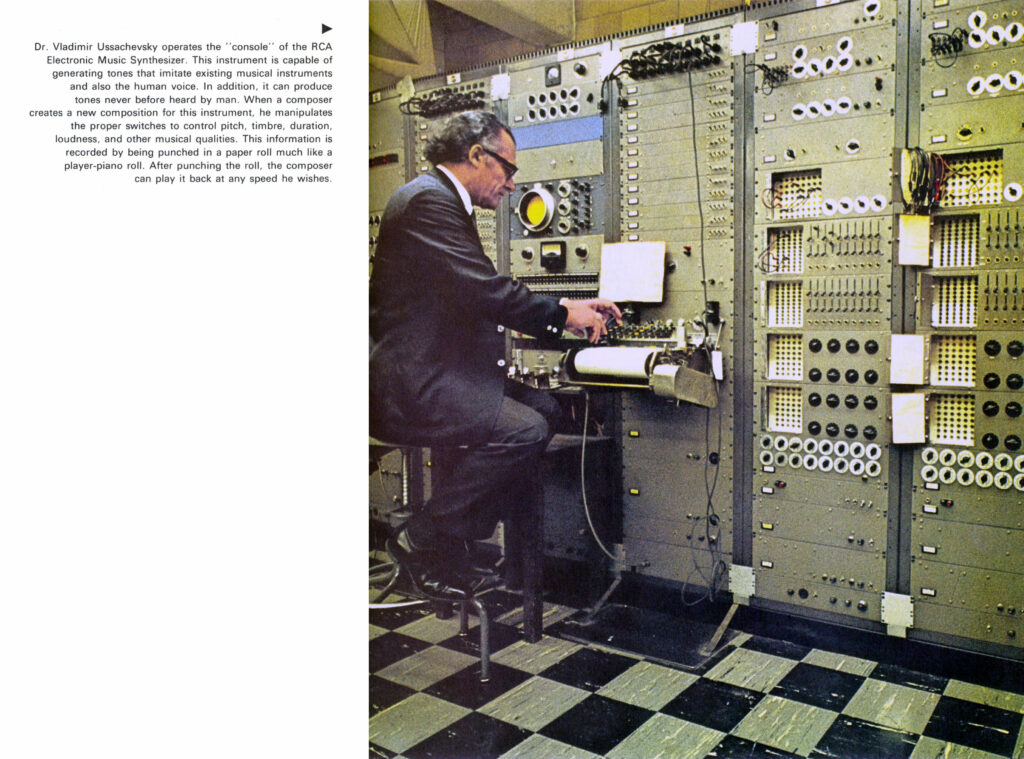
From: Making Music Your Own -
NO TITLE AS OF 13 FEBRUARY 2024 28,340 DEAD
Godspeed You! Black Emperor released a new album this fall, and it’s already playing on continuous repeat in my office. This album is surprisingly positive in tone, covering a range between melancholy and upbeat. While still the kings of crescendo-core,…
-
If we are truly praying this prayer to God’s honour, we can never simply pray for food for ourselves. We must pray for the needs of the whole world, where millions go hungry and many starve. And already we may sense, bubbling up out of the prayer, the realization that if we truly pray it we might also have to do something about it, to become part of God’s answer to our praying.
N.T. Wright, Matthew for Everyone, Part 1